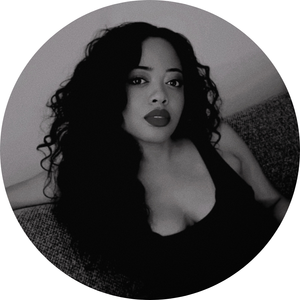
Gia Nicole
Gia Nicole is Flipping the Script on What It Means to Write in Purpose
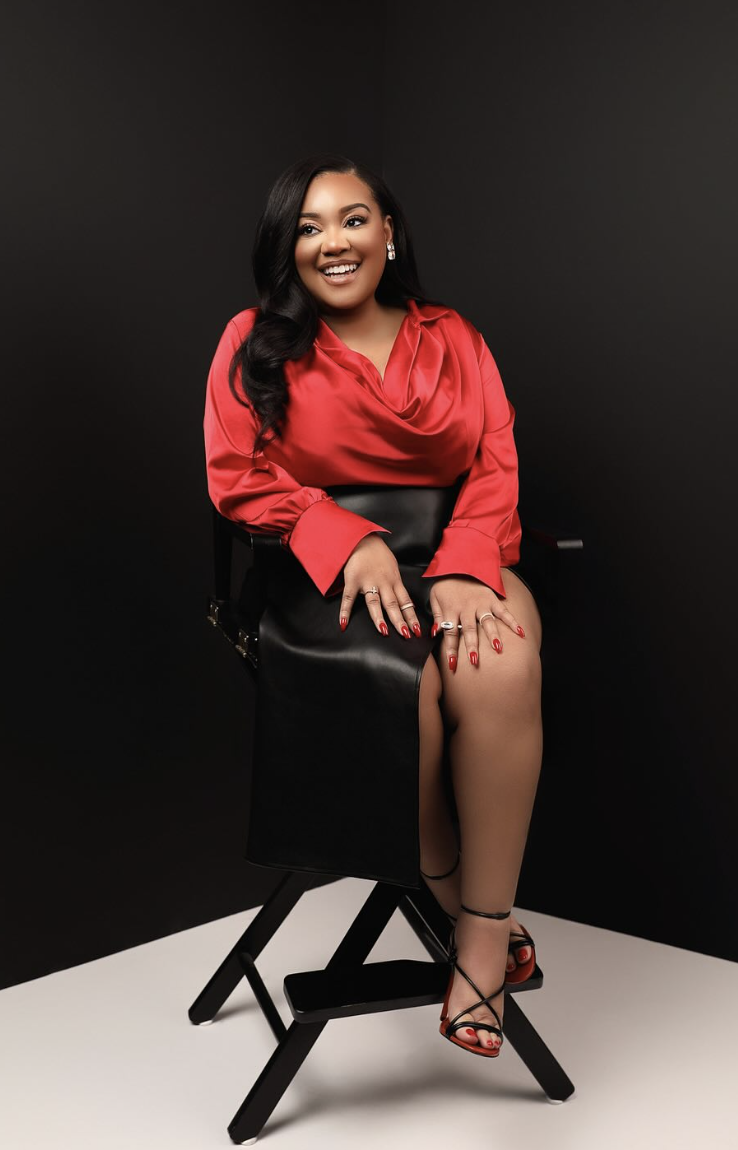
There is power in a name.
Whether it be a child, a creative project, or a new season in life, the decision to name a thing carries the spiritual power to not only proclaim life over it, but to also establish its purpose. Yet, as time moves forward and the demands of life take their toll, we can begin to lose sight of the purpose assigned over our life.
When it comes to the journey of accepting God’s call for our lives, my close friend, Atlanta-based screenwriter Gia Nicole knows a thing or two about what it means to walk in purpose.
Sitting on the couch in my apartment, mimosas in hand, Nicole vulnerably shares her journey transitioning from a decade working in corporate with powerhouses such as Meta, to becoming a UCLA certified television screenwriter determined to flip the script on what it means to write Christ-influenced stories. As she embarks on a new creative journey ignited by a word from God, she details the struggle to embrace the full weight of what He’s called her to do, while also questioning her own power and influence. But powerful is what Gia Nicole most certainly is.
In truth, it’s hard to write authentically about friends. Biases inevitably sneak through, perspective can become questionable, and what you hoped to convey can sometimes get lost amongst the poetic waxing and waning that, ultimately, just feels like you being a cheerleader for your friend.
Yet, throughout our conversation as Nicole discusses her relationship with Christ, her views on the current television industry, and her belief in doing things God’s way, I’m reminded why she’s a friend in the first place. Having Nicole on your team is powerful. In being a friend, our conversation left me with one recurring thought – I can’t wait until the world finally gets to see the real Gia Nicole.
Where Good Writing Starts
“I've lived so much of my life trying not to be seen,” Nicole shares.
Born in Atlanta, Georgia, her love for television shows started as a child in her grandmother’s living room. While her mom was working, Nicole would venture to her grandmother’s house after school where, for hours, the colorful, funny, engaging stories would capture her imagination. Though she found the shows a source of comfort, Nicole admits the reason why came from feeling inconvenient.
“I have an outgoing personality, people would think [I’m] an extrovert, but I think it’s just the way I grew up. My grandmother wasn't always happy to have me around so I would shrink,” she recalls.
“That’s where a part of my love for watching TV came from. I’d think, ‘how can I stay out of the way? I’m here, but I don’t want to bother this person.’ I did that in friend groups, too. How can I be of service to them so they don’t see me as a burden? Even if that means they don’t have to see me at all.”
But what happens when it’s time to be seen? Fast forward to 2025, and now Nicole is ready to leave her mark on the media industry as television’s next great screenwriter. With it? The decision to move out of her comfort zone and allow herself and her work to truly be seen. From making the decision to invest in her career with a new website, new spec scripts, and a new Instagram handle @bygianicole, she’s fully embracing the new era that is Gia Nicole. While I’ve always known her as Gia, I ask if the commitment to the full display of Gia Nicole as a brand feels like declaring a new name for this new chapter?
She nods, “It does. It separates me. I feel like Gia Nicole knows where she’s going. When you slap on that Nicole, it’s like alright let’s go! Gia is running around frantically like, ‘what’re we doing?!’. Gia Nicole is walking out. Scared or not, [she’s] not about to look crazy.”
A far cry from crazy, both Gia Nicole the person and the brand are the breath of fresh air the industry needs. With a new professional image, a budding portfolio, and a renewed sense of faith, I ask what is she naming this new season as she boldly carves out her own unique lane within the industry?
“Exceedingly abundant,” she responds with a smile. “More than I could ask or think. I don’t even think I have the capacity to know what’s coming,” she admits, “to really even dream of what’s coming. I think part of it is that I’m refusing to dream, because I don’t want the disappointment if it doesn’t happen.”
It’s a fair hesitance. Though her hope for the future is bright, a few tough seasons have left Nicole exhausted. Still, she believes in the gift that is her writing. A gift, she admits, that has taken time to fully accept. Even now, she shares, she still wonders about the credibility of her skill and its ability to secure success. It’s a familiar worry for many of us. Sometimes as we wade our way through the rivers of doubt, against the current we struggle to take hold of the path forward. When I ask if she’s a good writer, she pauses.
“I struggle with that. Some days I think I'm a good writer, other days I'm developing, but [ultimately] I think I'm a good writer. I’m an emotionally driven writer. I say what people are thinking.”
The Writing Process
Doubts aside, when it comes to discussing her work, Nicole’s eyes light up. Her passion for crafting authentic stories that resonate with audiences and ignite genuine emotion is made very clear whenever she speaks about her craft. While her day to day writing routine may vary, her writing process is a mixture of several key, foundational elements which combine to create her own impressive style.
“My writing style is based on questions,” she shares. “It's generally whatever nags me about that season that I’m called to write. I write what it would look like. It’s like a chessboard. I’m also very intune with how my characters feel, because I feel very deeply. If I disrupt [them], how does this make them feel, and is this unspoken or spoken? If it’s unspoken, how do I show that?”
The development of characters is something to which she puts a great deal of thought. For Nicole, there is a passion to use her characters to ignite the emotions of her audiences. Yet, it’s important those emotions are balanced, she stresses, as she doesn’t believe in leaving audiences unsettled.
“Anytime I’m writing I’m always asking, ‘how does this make the audience feel?’. I write characters that [make] you feel. Either you love to hate them or you hate to love them, but they need to all make you feel something. I think with any good character you have to put them in either the best or the worst environment for them to thrive for those emotions to come out, [but] I want to be cognizant of how I make audiences feel so as to not trigger them. If I’m going to make them sad, there must be relief at some point. In everything I write I want my audience to know I considered them. That’s important.”
Consideration is important, but no matter how hard we try, consciously or not, so much of our writing simply stems from the best and worst of who we are. Even in our attempts to remain subjective, much of the trauma, hurt, and emotion laying dormant inside us seeps its way into our art. It’s an artists’ cross to bear, right? We cut ourselves open, and use our blood as our ink. In Nicole’s case, her close relationship with her mother Adrienne who transitioned in 2021, rests at the core of all her work.
“I’m Adrienne’s daughter,” she says proudly. “My mom, and our relationship, is in everything.” She smiles, “I actually really love writing complex mother daughter relationships.”
What else shows up in her writing?
“Identity. I struggled with my identity because I grew up in a very critical household,” Nicole shares. “My grandmother was very critical. ‘You’re never small enough, pretty enough, you were never enough’. It was always something. Rejection will always show up in anything I write, [because] I’ve always been trying to prove something, whether it’s to my dad, to a man, or to my mom.”
“Friendship,” she adds happily, noting her favorite movie of all time is the Troy Byer written, Robert Townsend directed film B.A.P.S (1997). “I really value my friendships. I like writing the intricacies in betrayal of friendships. That’s what really called me to Insecure. I don’t think people talk about friendship breakups enough.”
A Dream Realized
Mothers, daughters, identity, rejection, and friendship. It’s those 5 core themes that build the foundation of a Gia Nicole script. While the dream of writing may have been planted in childhood in her grandmother’s living room, it wasn’t until 2022 Nicole made the decision to actively pursue her desire to not only write for television, but to attend her dream school University of California, Los Angeles (UCLA). In 2024, Nicole received her TV Writing Certification from UCLA extension.
“It was a dream realized,” she says. “I can finally say I’m a Bruin, I went to UCLA! It made me visible. It made me double down on what I want, too. I said I want to be a writer and now it’s like playtime over, it’s the big leagues, let’s go see what this is really about!”
Though the certification was a nod in the right direction, and even with the praise and support of industry peers, Nicole still felt nervous to fully pursue a career in screenwriting. It had been a tough year, and back-to-back medical difficulties, family stressors, and bouts of imposter syndrome had left Nicole questioning her path forward. Was this what she really wanted to do, and could she truly be a writer?
“It’s tough. Sometimes when you don’t get what you want, you almost give up wanting things and just say Lord do what you're going to do, because I don’t want to be disappointed,” she admits.
“I’m learning how to dream and want things again, and how to ask for things again. These last 3 years have been me saying [to God], do whatever you want to do, because I genuinely cannot take another disappointment. I can’t dream again. I can’t beg again and you tell me no. With UCLA it was like, we’ll do this, if it works it works, if it doesn’t it doesn’t. Everything was passive,” she says with a shrug. “I think it was the first time I was like Lord, I want to be a writer, I want to make a living as a writer. Not a hobby. I want this to be my job. I want to be a notable writer. I want to be known for excellence.”
She pauses. Looking off to the distance, she gives a soft chuckle before speaking, “I don’t want to be someone people are making a joke out of.”
Answering The Call
For Nicole, making the decision to pursue what she feels is her life’s purpose has been riddled with such thoughts. Imposter syndrome, the fear of being seen, and being taken as a joke are all worries she’s still learning to overcome. Yet, while she’s had her battles, ultimately failing has become the one fear with which she’s quickly learned to come to terms.
“I’m okay with [failing], because I've been so reflective about my mom,” she reveals.
“My mom lived a very safe life, and I watched her on her deathbed say all the things that she wished she would have tried, or wished she would have done. I would rather say I tried everything than be on my deathbed saying I don't know if I would have been good or not. If I’m going to be bad, I want to at least be able to say I tried.”
While the realization about her mother helped push Nicole to get serious about pursuing her dream, ultimately it was understanding God’s call for her life that helped alleviate her fears.
“I’m coming into agreement that I feel like this [writing] is a God given gift. I have heard God say to me, ‘you have this gift and this is how I want you to use it.’,” she shares. “There is no failure at this point.”
Nicole, who is Christian, says she puts her relationship with God above all else. Part of that includes obedience to His word, and submission to His plan for her life. But, what exactly is it that she feels God has called her to do?
“God has specifically asked me to put out art that shows His way of doing things in an appealing way to disrupt what the media is already showing people in order to give His children something to aspire to that is not perverting how He wants them to actually live,” she states.
While she may seem accepting about it now, Nicole reveals it wasn’t always that way. When she first felt God’s instructions on her heart, she recalls being very confused about what it meant for her career as a screenwriter.
“When I first got on fire for [the call], I didn’t understand what I could and couldn’t do. What if I can't work with Issa Rae? What if I can’t write Diarra from Detroit? Because that was my thing, I really wanted to write for Diarra from Detroit! [But] I don’t want to misrepresent the call. I had to get clear on what [God] is asking me to do, and what are my boundaries, so I don’t go out there and look double minded.”
It sounds simple, but she admits it took her some time to accept that the idea she originally had for her career was no longer going to look how she’d always envisioned.
“I had to mourn what I wanted my career to look like as a writer because it wasn't this. My goal was to get in front of the Issa Raes and the Diarra Kilpatricks where they would want me to write for them. To get to this point where I feel God has called me to write things that glorify and edify Him, [I’m asking] what does that mean? Can I do that in this space, or do I have to be separate from this space?
I asked, ‘Lord, what is it that you want me to do?’. This wasn’t my dream, so I don’t know how to do this. I had a plan for my dream, I didn’t have a plan for your call. In those conversations I feel God nudging me like, ‘there’s a need for what you have. I didn’t just give you this for you to play with, my children need what you have. Write.’”
God’s Way Works
If there were ever a time for more faith centered stories, it would be in today’s present culture. With the rise of more sexually suggestive scenes in television programs, uncontrolled access on social media, and music riddled with explicit lyrics, there seems to be a lack of engaging and entertaining faith content.
“I think the media has perverted God’s way,” Nicole says. “It has intentionally made God’s way look boring and lame and bad, and it has glorified sin. The enemy is really after us, especially the youth.
I think the media had a lot to do with me going astray. I lost my virginity at 21, and I remember what I was listening to and what I was watching at that time. People in my community weren’t saying wait until you get married, and it wore me down. I wasn’t hanging out with virgins, I was on a college campus where everyone was sleeping with everybody. It made it that much easier to [have sex]. Had I had shows and media that centered these fly, ambitious women that showed they were going to wait, and there was a wrestle in the wait but they overcame temptation, I may not have gone that way.”
It’s her own experience that fuels her passion to create media that exposes the youth to better options, specifically ones that show God’s way works. With her scripts, it’s her desire to bring a fresh perspective to how audiences consume faith based media, and to challenge the narrative of what it means to write Christian stories. For so long audiences have labeled Christian shows
and films as monolithic, stale, and boring. Nicole is disrupting that narrative, infusing vitality, humor, emotional authenticity, and yes, faith into her scripts. While she understands the narrative the term can carry, ultimately she has no qualms about being referred to as a Christian writer.
“I feel that any script I write is co-authored between me and God. He’s planting a seed and I’m bringing it to life,” she states. “I’m never going to say I’m not a Chritsian. Clearly, [audiences] know what I believe. My stories flow out of me and my beliefs. Whether I say it’s a Christian story or a faith based story, it’s never going to be me not saying where I stand and what God I serve.”
Besides, for Nicole there’s a larger purpose at work than people shrugging her off as ‘just’ a Christian writer.
“I want my future kids to never have to question my faith. I want it to be evident that I am submitted to God,” she shares. “I want them to see art of mine that shows them love doesn’t have to hurt, it doesn’t have to be toxic, and it doesn’t always have to be something you have to heal from.”
After all, it is her love for Christ, and His love for her, that sustains and empowers Nicole.
“You cannot tell me that God doesn’t see me, that He does not know me, and that He does not care for me,” she declares passionately. Even when I did not care for Him. I feel indebted to Him. All you’re asking me to do is to write? That’s the least I can do. That’s all He’s asking me to do. He is kind. He is so intentional, and He is enough.”
Enough. It has me question, in this life what is actually enough for us? When do we know whether what we have is enough? When do we reach the point where we accept we have enough to realize our own power and choose to finally walk in our purpose? For Nicole, enough is always rooted in Christ.
“The unshakeable truth,” she says, “is that He must be enough. And I have to treat Him like He is enough. The gift must be enough. The gift must be efficient, [because] He gave it to me. It’s a good gift. It’s a full circle to your question, do I think I’m a good writer? Yes I am, because God made me a writer. That’s the answer. I am a good writer, because God created me to write. He might have created me for something else too, but right now He’s revealed to me He created me to write. He created me to be a light in dark places and to go get His kids back, even if it’s one person. If I never get an Emmy, if I never get any award, one person being able to say I was going to commit suicide but I didn’t because I watched this movie, or I was going to go sleep with someone but I didn’t because I watched this, that should be enough for me.” A quick pause. “And it will be,” she finishes.
The Final Gift
Mimosas now empty, as we wrap up our conversation I find Nicole’s faith exhilarating. It’s the type of faith that empowers you to reach for something more, to believe that you alone are capable of reaching deep down within and pulling forth the greatness God sowed within you.
Yet, while I could sing her praises all day, sometimes it’s not what others say about us, it’s what we say about ourselves. When asked how she would summarize her own story, Nicole lets out a shocked gasp (“My whole story?!”), but then she immediately smiles. She ponders it for a second before answering, “I think I’m God’s child. I’m Adrienne’s daughter. Now, I’m a woman who is trying to save a generation. I am someone who loves deeply, and loves my friends deeply. I am a woman who is now acknowledging my need for community, because I think I have done life alone for a really long time. I am a person who is healing and hurting at the same time. But, I understand my power, and I understand my influence. I’m finally taking that seriously.”
I understand my power. On hearing it, I can’t help but believe God is smiling down on His daughter, ready to reign down His blessings as she navigates the media industry with a success, protection, and fruitfulness that can only come from Him.
With all our talk of naming, purpose, and identity, at the close of our conversation there’s only one question I have left, and ultimately it may be the most important question of them all. What does the name Gia stand for?
“Oh!” she exclaims, “Let me look it up, it means something pretty, but I always forget.” I always forget.
As she scans her phone for the definition, I toss it around my mind. And I guess ultimately that’s all of us sometimes, forgetting our own purpose, and negating our own call over our life. In between the hustle and bustle of living, we know our lives mean something, yet somehow we let slip away the innate truth that we were sent here to do something more, birthed to become something greater.
“Oh, it means God’s gift,” she reads. “Or, gift from God.”
She pauses for a second, staring at the phone taking the definition in once again before looking up with a bright smile.
A gift from God.
“Here I am.” •